
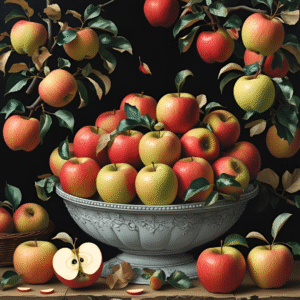
 Apples are one of those everyday fruits we often take for granted. Whether they show up in lunchboxes, pies, or juice bottles, it’s easy to forget just how long they’ve been part of human life. But behind each crisp bite is a story that stretches back thousands of years and thousands of miles.
Believe it or not, the apples we know today didn’t start off as the big, sweet fruits we enjoy now. Their earliest ancestors grew wild in the mountain forests of Central Asia, especially in what’s now Kazakhstan. Long before supermarkets and orchards, early people living in those regions began noticing that some of the wild apples were better than others—bigger, tastier, and less bitter. Over generations, they started selecting and growing the better ones.
The forests where these wild apples came from were so rich in variety that they caught the attention of explorers and scientists centuries later. People like Johann Sievers and Nikolai Vavilov ventured into these regions and documented just how special these apple trees were. Sadly, many of those ancient forests are now at risk, but they remain a powerful reminder of nature’s role in shaping the foods we rely on today.
What’s especially fascinating is how apples reproduce. Unlike typical flowers, the apple blossom comes from a structure called a syconium, which has tiny flowers inside a hollow body. In the wild, these used to be pollinated by insects like fig wasps, a pretty unusual arrangement. These days, though, bees have taken over that role in commercial orchards.
As humans began trading and traveling, apples traveled with them. They made their way into Persia, across Europe, and eventually across the Atlantic with European settlers who brought seeds and saplings to the Americas. With each new place, apples adapted to different climates, cultures, and uses—becoming a truly global fruit.
Growing apples isn’t as simple as planting a tree and waiting. They need specific conditions to thrive. Cold winters help the trees rest, while mild, frost-free springs ensure the blossoms survive. Orchard care involves quite a bit of hands-on effort. In winter, trees are pruned so that light and air can reach all the branches. In the summer, extra apples are removed to help the remaining ones grow larger and tastier. Watering is managed carefully, since just the right amount can boost the sugar levels in the fruit. When harvest time comes, each apple is picked by hand to prevent bruising. Then they’re stored in specially controlled environments where oxygen is reduced and carbon dioxide is increased, slowing down ripening so the apples stay fresh for months.
Nutritionally, apples are a great deal in a small package. One medium apple is only about 95 calories but provides a good amount of fiber, plus potassium, vitamin C, and vitamin K. Most of the antioxidants—those helpful plant compounds that protect our cells—are found in the skin, so eating the peel is a good idea. Regularly eating apples can support digestion, help manage blood sugar, lower bad cholesterol, and reduce inflammation.
And when it comes to cooking, apples are nothing if not versatile. Fresh slices bring crunch and sweetness to salads, and they pair beautifully with cheeses. Cooked apples are perfect alongside meats like pork, and they shine in desserts from pies to crumbles. They can be dried into chewy snacks, blended into sauces, or fermented into cider, brandy, or sparkling wine. Their range in the kitchen is one of the reasons they’ve remained popular for so long.
In terms of farming, apples are a major player. In 2022, over 87 million metric tons of apples were produced around the world, with China, the U.S., Poland, and Italy topping the list. The apple industry is worth billions globally and continues to grow, thanks in part to rising interest in organic fruit, heirloom varieties, and value-added products like apple chips and cosmetics made from apple extracts. Many towns still hold harvest festivals in celebration of apple season, keeping the cultural connection alive.
Looking ahead, apples are also helping pave the way for greener agriculture. Scientists are going back to those wild apple genes to breed new varieties that can resist disease naturally and handle changing climates better. Many growers are using fewer chemicals and adopting more eco-friendly methods, protecting both the soil and surrounding ecosystems. Even the leftover parts of apples—like peels and cores—are being repurposed into useful things like biofuels, animal feed, and food ingredients like pectin. It’s all part of building a circular economy where nothing goes to waste.
If we conclude apples are much more than just a fruit. They connect us to ancient forests, to generations of farmers, to evolving food traditions, and to the future of sustainable living. So the next time you bite into an apple, remember you’re not just eating a snack. You’re tasting a story that began thousands of years ago and continues to grow with every season.
