
Dates Through Time: A Superfood Rooted in Culture,
Nutrition, and Tradition
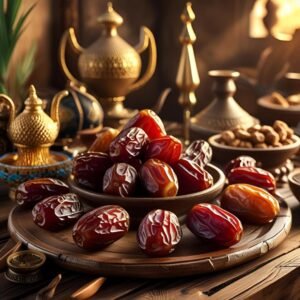
Dates are more than simply fruits as they represent a historical legacy that is strongly rooted in the cultural, economic, and spiritual foundation of ancient societies. Archaeologists suggest that dates were grown as early as 4000 BCE, particularly in Mesopotamia and the Indus Valley. Date cultivation has spread along the trade routes from North Africa and Arabian Peninsula to South Asia and beyond. This is because of its hardiness, nutritional value, and long shelf life.
The date palm (Phoenix dactylifera) grows in hot and arid areas with little water, and has become an important crop for the people living in the deserts. Its fruits were not only used as food but also as currency, an offering, and as a symbol of hospitality and success. Date palms are still honored as “trees of life” in many desert civilizations and represent abundance, perseverance, and spiritual blessings.
There are around 200 types of dates worldwide, each with a unique taste, texture, and size. These varieties can be classified as soft, semi-dry, or dry based on their moisture content and sugar crystallization. Medjool is known as “King of Dates”, and originates in Morocco. However, currently it is widely grown in the United States, Israel, and Jordan. Its flavor is toffee-like and exceedingly sweet. Its texture is soft, juicy, and savory. It is widely used as snacks, sweets, and stuffed dates. Another type of dates is Deglet Noor, commonly known as “Queen of Dates”, and originates in Algeria, Tunisia. Its flavor is mild, nutty, and less sweet. Its texture is firm and semi-dry. It is used in cooking, baking, and salads.
Ajwa is another popular variety if datas and originated in Medina, Saudi Arabia. Its flavor is subtly sweet with a dry mouthfeel. Ajwa is highly valued in Islam because the Prophet Muhammad (PBUH) is said to have praised them. Its common uses include religious ceremonies and regular snacking. Barhi dates originate from Iraq and are consumed during its different stages, these include fresh (khalal), ripe (rutab), or dried (tamr). Its texture is soft and creamy when ripe. Its flavor is buttery and honey-like, and can be eaten fresh or in desserts. Zahidi dates originate in Iraq and Iran. Its texture is Semi-dry and firm. Its flavor is nutty and less sweet. Its common uses are in the stuffing and commercial processing. Sukkari date originates from Saudi Arabia. Its flavor is exceptionally sweet and its texture is crisp and moist. It is commonly used in traditional consumption and gifting. Khudri, Safawi, and Mabroom dates originate from Saudi Arabia, and are commonly used as healthy snacks and in commercial export. Their defining characteristics are that they are affordable, readily available, and have a long shelf life. The taste, texture, and popularity of each type of date varieties is highly dependent on the soil, climate, and agricultural practices of the regions they are grown in. This also shapes the local food customs and trade in these regions.
Dates are rich in nutrients, compact in size, and high in health-promoting chemicals. 100 grams of dates provide 277 calories, and the key nutrients include 75 grams of carbohydrates (mostly natural sugars: glucose, fructose, and sucrose), 7 grams of dietary fiber, 2 grams of protein, 0.2 grams of fat, 20% of daily value (DV) Potassium, 14% of the DV magnesium, 5% of the DV iron, and 12% of daily value vitamin B6.
Dates also have a number of major health benefits. Dates are rich in insoluble and soluble fiber, which promotes bowel regularity and lowers the risk of constipation and colon diseases, thus helping in digestive health. They are a readily available natural energy source, especially for athletes and those fasting. Dates help regulate the health of the heart as they are high in potassium and magnesium, which help in controlling blood pressure and lower the risk of cardiovascular disease. They also help in bone strength, as the calcium, phosphorus, and magnesium present in dates help to maintain bone density and prevent osteoporosis. Dates are also an antioxidant powerhouse, as they are high in polyphenols, flavonoids, carotenoids, and tannins, which fight oxidative stress and may lower the risk of cancer, diabetes, and dementia. According to studies, eating dates in the final weeks of pregnancy may improve the dilatation of the cervical cavity and shorten the labor time.
Dates have a number of culinary uses, as they are extremely adaptable in the kitchen and can act as a natural sweetener, binder, filler, garnish, and even the main ingredient. Dates have appeared in every cuisine influenced by desert trade or migration, from ancient meals to modern kitchens. They are used for a number of purposes in Middle Eastern, North African, South Asian, and Western cuisines, in various proportions according to the recipe. The most popular among them are Middle Eastern cuisines made from dates. These include ma’amoul pastries, baklava, and stuffed dates. Dates can be used in everyday life as a snack or can be stuffed with almonds, walnuts, and peanut butter for a unique taste and energy boost. It can be added to smoothies for natural sweetness. It can also be chopped into salads or used to make breakfast bowls. When dates are converted into date paste, they are used in cookies, energy bars, or sauces. In baking, dates can replace sugar in breads, brownies, and muffins and can be combined with oats, seeds, and almonds to create energy bites.
Dates are also used in savory dishes like Moroccan tagines, which contain lamb and spices. It can also be blended with chutneys and sauces for tangy-sweet combinations.
In beverages, they are used in date shakes, smoothies, or infused herbal teas. Date syrup can also sweeten coffee, tea, or other drinks. Date products can be easily made at home. Some of the famous products include the date syrup, date paste, and energy balls. These homemade products maintain the nutritional value of dates and also add flavor and texture to the daily meals
Dates have been used historically in traditional medicine and spiritual activities. They are appreciated not only for their nutritional benefits but also for their medicinal and symbolic characteristics. Dates have been used in medicines across various cultures. For example, in Ayurveda, dates are used to increase strength, libido, and vitality. In Unani and Tibb, dates are used to treat respiratory disorders, anemia, and intestinal problems. In traditional Chinese medicine, dates in general and red dates in particular are used as blood tonics that restore qi and spleen energy. Dates have both religious and cultural significance in Islam, as they are mentioned more than 20 times in the Quran. The Prophet Muhammad (PBUH) highlighted the health benefits of dates and used them to break fasts throughout Ramadan. In Christianity and Judaism, dates represented prosperity and fertility in the Bible and Torah. They were frequently consumed during religious holidays. Also, date palm leaves represent peace and victory in Christianity. Dates are also used as popular gifts during Eid, weddings, and other ceremonies in Muslim-majority cultures.
The table below shows comparison of dates with other natural sweeteners in terms of nutritional value
| Sweetener | Nutritional Value | Glycemic Index | Fiber | Antioxidants | Processing Level |
| Dates | High (minerals, fiber, vitamins) | Low to Medium | High | High | Minimal |
| Honey | Medium (some enzymes & antioxidants) | Medium | None | Moderate | Medium |
| Maple Syrup | Low (some minerals) | High | None | Low | Medium |
| Agave Nectar | Low | Very High | None | Low | High |
| White Sugar | None | Very High | None | None | High |
Thus, it can be noted that dates are used not only as natural sweeteners but also as nourishing food. Their whole food nature and the presence of essential nutrients and antioxidants make them a superior sweetener for both traditional and modern diets. From ancient times till modern periods, dates have maintained their role as a superfood. They are evidence of the resourcefulness of nature and the continuation of cultures. Their appeal to human nature extends beyond countries, faiths, and cuisines. Dates are a wonderful combination of flavor, nutrition, and tradition. Whether they are eaten as a snack, added to a gourmet cuisine, or used for their health benefits, they are truly a genuine gift of nature.
