
The Heart in the Bottle: How Mustard Oil
Nourishes Generations
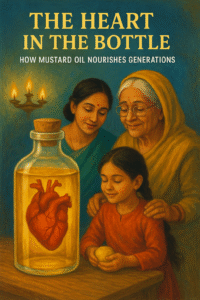 Mustard oil isn’t just something found in a kitchen cabinet—it’s part of people’s lives, memories, and everyday rituals, especially in South Asia. Its sharp, earthy aroma can instantly transport someone back to their mother’s kitchen, where onions sizzled in the pan and a comforting meal was always on the way. It’s not just the oil that’s cooking—it’s memories, emotions, and stories simmering alongside. For many, it’s the smell of home.
This golden, slightly reddish oil comes from pressing mustard seeds—black, brown, or yellow—using a cold-press technique that helps preserve its nutrients and natural flavor. That flavor is unmistakably strong and peppery, and while it may take some getting used to, those raised with it often can’t imagine their favorite dishes without it. Whether it’s drizzled over a plate of steaming lentils or used to fry up spicy pakoras, mustard oil adds more than taste—it adds character.
What makes mustard oil truly special is how deeply it’s woven into daily life. In the kitchen, it’s a cooking champion. It has a high smoke point, making it perfect for frying without breaking down or losing its benefits. From pickles lovingly prepared and stored in jars for months to tangy fish curries bubbling away in clay pots, mustard oil lends not just flavor but authenticity. It’s the flavor of tradition.
Yet its use goes far beyond cooking. Mustard oil has long been a go-to home remedy in many families. When someone catches a cold, it’s often warmed with garlic and massaged onto the chest—an age-old comfort passed down through grandmothers and mothers. A sore throat, an aching joint, even a sluggish digestion—there’s a mustard oil cure for that. Just a small amount in warm water or in meals is believed to boost appetite and help the body absorb food better. These aren’t just folk beliefs—they’re family legacies.
It’s also a trusted beauty companion. Brides-to-be in many parts of India and Pakistan receive mustard oil massages before their wedding day to bring a natural glow to their skin. Elders often rub it into the scalp of young children to strengthen their hair. And still today, people turn to it for keeping their skin soft, their hair thick, and their scalps dandruff-free. It doesn’t come in a fancy bottle or carry a celebrity endorsement, yet its results are trusted—because they’ve been seen, felt, and passed down through generations.
There’s also a spiritual and practical side. Farmers have used it to protect crops from pests naturally, without chemicals. In some homes, mustard oil is used during prayers, symbolizing purity and cleansing. Some even practice oil pulling—swishing it in the mouth to support dental and gum health—a method that has been around for centuries and is now gaining popularity in wellness circles around the world.
Still, it’s important to use mustard oil carefully. In some countries, it’s sold only for external use due to regulatory differences. That’s why it’s always wise to check the label and, if using it on the skin for the first time, test a small amount to avoid irritation. However, in South Asian homes, it has long been a safe and trusted companion in both the kitchen and the medicine cabinet.
When buying mustard oil, look for versions labeled cold-pressed and organic. Store it well—in glass or steel containers, away from sunlight and heat—to keep it fresh and potent. It doesn’t just sit on the shelf; it waits patiently for the next moment it’s needed—whether it’s to fry, to heal, to soothe, or simply to remind you of someone you love.
In a world constantly reaching for new superfoods, exotic oils, or skincare fads, mustard oil stands as a quiet, powerful reminder that the best things are often already with us. Not just nourishing for the body, but deeply rooted in the heart—it’s a tradition, a remedy, and a flavor of home.
